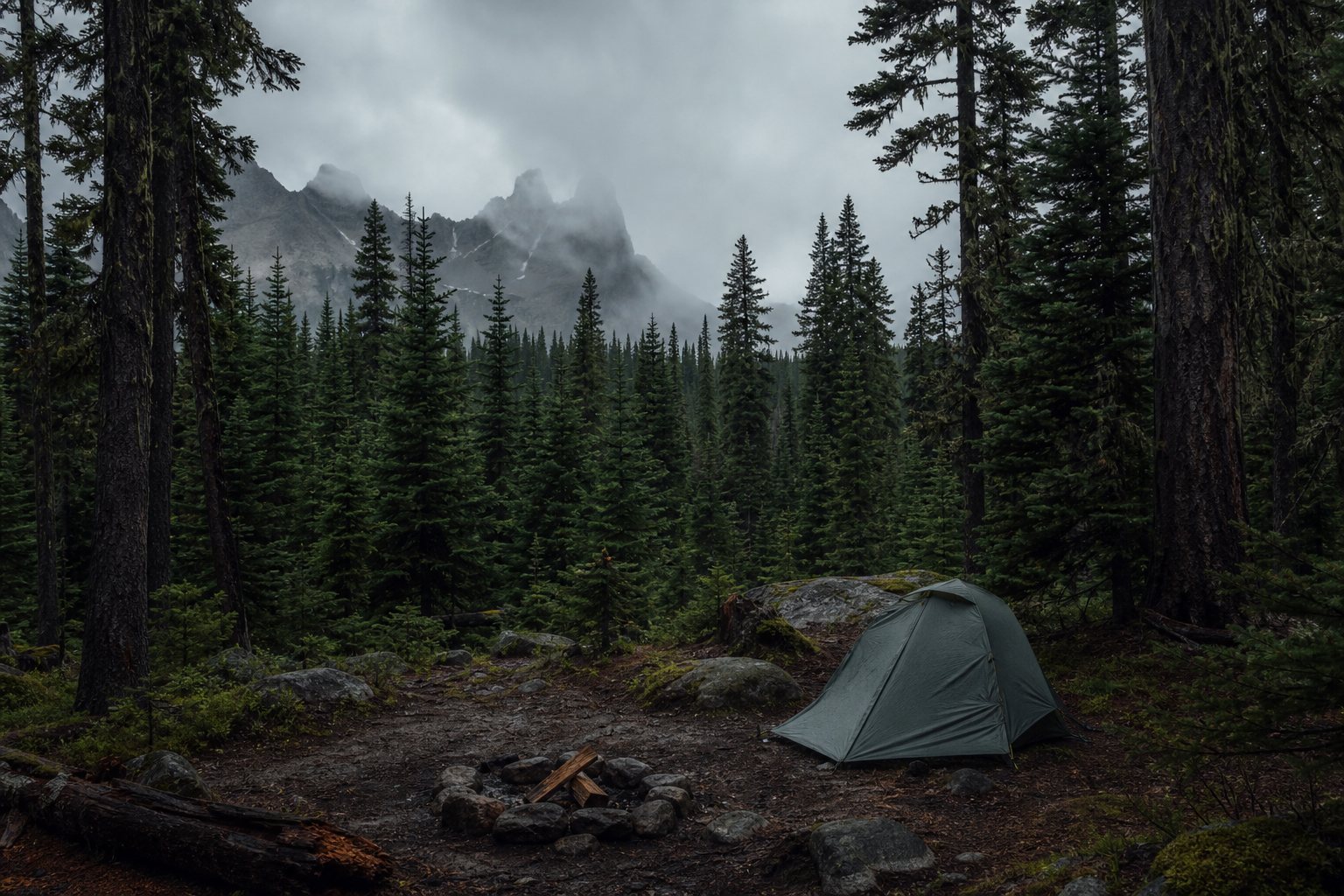
Low-profile overnighting — what most people loosely call "stealth" — is not about hiding from the law or sneaking onto land you have no right to use. Done honestly, it means one thing: looking like a vehicle that simply belongs where it's parked, so you don't draw attention, don't get a knock at 3 a.m., and don't burn a spot for the next traveller. You are a guest. Act like one.
This guide is for legal, permitted overnighting. It is not about trespassing on private land or ignoring posted signs. When in doubt, the answer is to move, not to argue.
The core idea: belong, don't blend
Enforcement and complaints almost always start with exterior cues that say "someone is living in here." Remove the cues and most of the problem disappears.
- Park nose-out, level, between the lines — like you ran in for groceries, not like you're settling in.
- Nothing on the outside. No chairs, no awning, no levelling blocks left out, no window coverings that scream "blackout curtains." Generators and slide-outs are the single biggest "ask first" trigger.
- Arrive late, leave early. Roll in after dark, be gone by mid-morning. One night, one spot.
- Lights and noise low. A red headlamp inside reads very differently from white cabin lights through curtains.
- Don't cluster. Two or three vans together stops being "a parked vehicle" and becomes "an encampment" — which is what bylaws are written to stop.
The five-minute egress
Have a standing rule: from a knock on the window to rolling, under five minutes, every time. That means sleeping with the cab clear, keys in a known spot, nothing blocking the driver's seat, and curtains you can drop fast. You will rarely need it — but the ability to leave calmly and immediately is what keeps a polite "you can't stay here" from becoming a ticket or a tow. If someone with authority asks you to move, thank them and move. That single habit protects the whole community's access.
Where overnight parking is actually restricted
This is the part travellers get wrong: there is no national rule, and bylaws vary enormously between municipalities. What's fine in one town is a tow in the next.
- Toronto, ON: A city-wide bylaw limits on-street parking to 3 hours without a permit; overnight parking requires a residential permit. Sleeping in your vehicle on the street is not a workaround for this. (toronto.ca, Residential On-Street Parking)
- Vancouver, BC: Large vehicles and RVs cannot park on the street between 10 p.m. and 6 a.m., and are limited to 3 hours otherwise. (vancouver.ca, Parking large vehicles and trailers)
- Winter parking bans: Many Ontario and Prairie municipalities prohibit all overnight on-street parking in winter months (commonly 2 a.m.–7 a.m., dates vary) for snow clearing — e.g., Kitchener and St. Thomas post seasonal bans. (cityofkitchener / stthomas.ca)
- Parks Canada land: Camping, including sleeping in a vehicle, is not allowed in roadside pullouts, trailheads, and day-use areas. Overnight means a booked campsite. (parks.canada.ca, Visitor guidelines)
Everywhere else: varies — confirm locally. Search the municipality's name plus "parking bylaw," or call the bylaw / 311 line. Five minutes of checking beats a tow.
> Use the Muddy Tires bylaw / overnight-restriction layer to see municipal overnight and winter-ban zones before you commit to a town — but treat it as a starting point, not legal advice. Bylaws change; the sign on the post wins.
Private lots: ask, don't assume
Big-box and travel-stop lots can be a legal, welcome option — but only with permission, and the permission is local.
- Walmart Canada's corporate FAQ states it permits RV parking on store lots where able, with permission "extended by individual store managers, based on availability of parking space and local laws." Many Canadian locations no longer allow it, and municipal ordinances or the landlord who owns the lot can override store permission. Always go in and ask a manager. (corporate.walmart.com, Ask Walmart)
- Canadian Tire, Cabela's / Bass Pro, and major truck stops are commonly traveller-friendly — but none of this is a posted guarantee. Ask each time; a "yes" last year isn't a "yes" tonight.
Buy something. Use the store. Leave the spot cleaner than you found it. That goodwill is literally what keeps these lots open to the next van.
Note: avoid relying on crowd-sourced "where to sleep" apps whose terms of use bar commercial reuse — confirm the spot yourself.
The honest legal caveats
- No permission anywhere is permanent. A manager, a security guard, or an officer can ask you to leave a private lot at any time, for any reason. They don't owe you a reason.
- "Low-profile" never means "on land you have no right to use." Looking unobtrusive on a legal spot is courtesy. Looking unobtrusive to get away with trespassing is a different thing, and not what this is.
- Bylaw enforcement is uneven and political. A spot tolerated for years can flip after a few complaints. Don't take quiet acceptance as a right.
- When facts here say "varies," they vary. Confirm the specific municipality and the specific lot, every time.
The whole game is reputation — yours and every traveller who comes after you. Park like you belong, leave no trace, and move the moment you're asked. That's the entire craft.
Sources: City of Toronto (Residential On-Street Parking); City of Vancouver (Parking large vehicles and trailers); Parks Canada (Visitor guidelines, parks.canada.ca/voyage-travel/regles-rules); Walmart corporate (Ask Walmart FAQ); City of Kitchener and City of St. Thomas (winter overnight parking bans). Municipal bylaws change — verify locally before relying on any specific figure or rule.